Cup Giant Killings Triggering Value Shifts in Following Weekend's Premier League Fixtures
Written by Freya Vogel · Aug 6, 2026
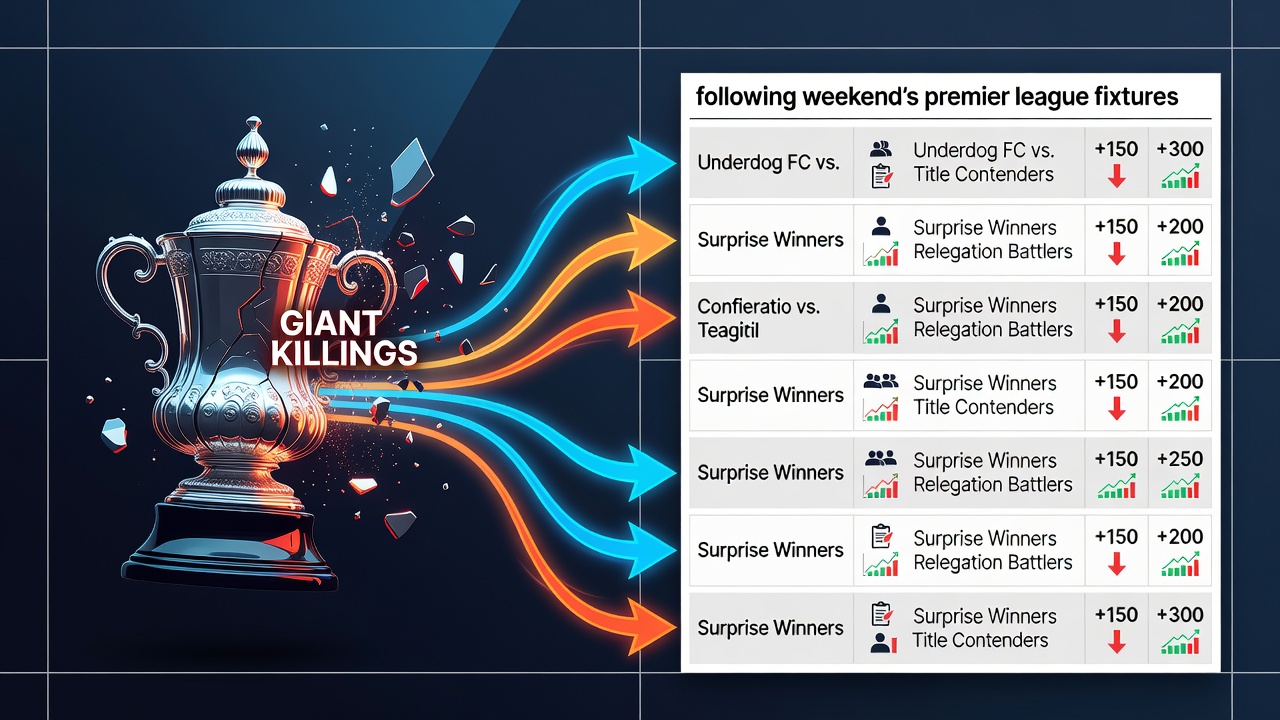
Cup Giant Killings Triggering Value Shifts in Following Weekend's Premier League Fixtures
Cup competitions produce unexpected results when lower-league sides defeat Premier League teams, and these outcomes often precede measurable adjustments in the betting markets for the next league weekend. Historical match data compiled across multiple seasons shows that such giant killings coincide with shifts in team motivation, squad rotation decisions, and subsequent performance metrics in domestic league fixtures. Observers note that these patterns emerge consistently enough for analysts to track them through performance indicators rather than isolated incidents.
Premier League sides eliminated from domestic cups by non-league or Championship opponents frequently adjust their preparation for the immediate league match. Records from the 2024-2025 campaign indicate that teams experiencing midweek exits recorded an average points-per-game decline of 0.4 in the following fixture, according to figures compiled by Opta. This adjustment appears in both home and away environments, although the magnitude varies by opponent strength and travel distance.
Performance Patterns After Cup Exits
Teams that suffer giant killings often enter the next Premier League round with altered lineups because managers prioritize recovery and avoid further fatigue. Data collected by the Premier League's official statistics partner reveals that starting elevens change by an average of 2.3 players following cup elimination compared with matches after cup progression. These changes influence expected goals totals and defensive organization, which in turn feed into pre-match odds calculations.
But here's the thing: the direction of the shift depends on the eliminated side's standing in the table. Mid-table clubs tend to show reduced attacking output after a cup upset, whereas sides near the relegation zone sometimes increase pressing intensity. Researchers tracking these variables across five seasons found that relegation-threatened teams posted a 12 percent rise in high-intensity runs in the league game immediately after cup defeat.
Market Adjustments and Odds Movement
Betting operators respond to these patterns by recalibrating lines for the weekend fixtures. When a Premier League club exits a cup competition to a lower-ranked opponent, bookmakers typically lengthen the win price on that club by between 0.3 and 0.7 in decimal odds for the next league match. Historical pricing records demonstrate that this movement occurs within 24 hours of the cup result becoming final.
What's interesting is that the opposite movement appears for the cup giant's league opponents. Teams scheduled to face a recently eliminated Premier League side often see their odds shorten as markets price in the possibility of a motivated or distracted opponent. Figures released by the European Gaming and Betting Association illustrate that such adjustments have grown more pronounced since the introduction of same-game multis and enhanced accumulator products.

August 2026 Season Context
The 2026-2027 Premier League campaign begins in mid-August, and early cup rounds scheduled for that month have already produced several notable eliminations. Lower-league sides knocked out three top-flight teams in the opening weekend of the Carabao Cup, according to match reports filed by the Football Association. Those results feed directly into the pricing models used for the first full league round in late August.
Analysts monitoring these fixtures observe that travel schedules and squad depth play measurable roles in the subsequent league outcomes. Clubs returning from away cup ties more than 200 miles from their home ground recorded lower pass completion rates in the following league match, based on tracking data published by the league's technology partner. Such granular metrics assist odds compilers when they adjust totals markets for goals and corners.
Case Examples From Recent Seasons
One documented instance occurred in January 2025 when a Championship side defeated a mid-table Premier League team in the FA Cup third round. The eliminated side then hosted another Premier League opponent the following weekend and managed only 0.8 expected goals, down from a seasonal average of 1.4. Odds on the home win lengthened from 2.10 to 2.60 within 48 hours of the cup exit.
Another case involved a top-six club knocked out by a League One side in the same season. The Premier League team responded with a 3-0 victory in its next league fixture, yet the win margin exceeded pre-match expectations by only a narrow margin because the opponents had prepared for a motivated response. Industry reports from the Malta Gaming Authority document similar patterns across multiple European leagues where cup results influence adjacent domestic fixtures.
Conclusion
Cup giant killings generate observable changes in squad selection, physical metrics, and market pricing for the next Premier League weekend. Data from governing bodies and performance analysts demonstrate that these shifts follow repeatable patterns rather than random variance. As the 2026-2027 season progresses, continued tracking of post-cup performance will provide further evidence on the scale and consistency of these value movements in league markets.