Fading Minutes Fireworks: Injury Time Odds Surges in Premier League, Champions League, and EFL Clashes
Written by Henrik Schmitt · Mar 22, 2026
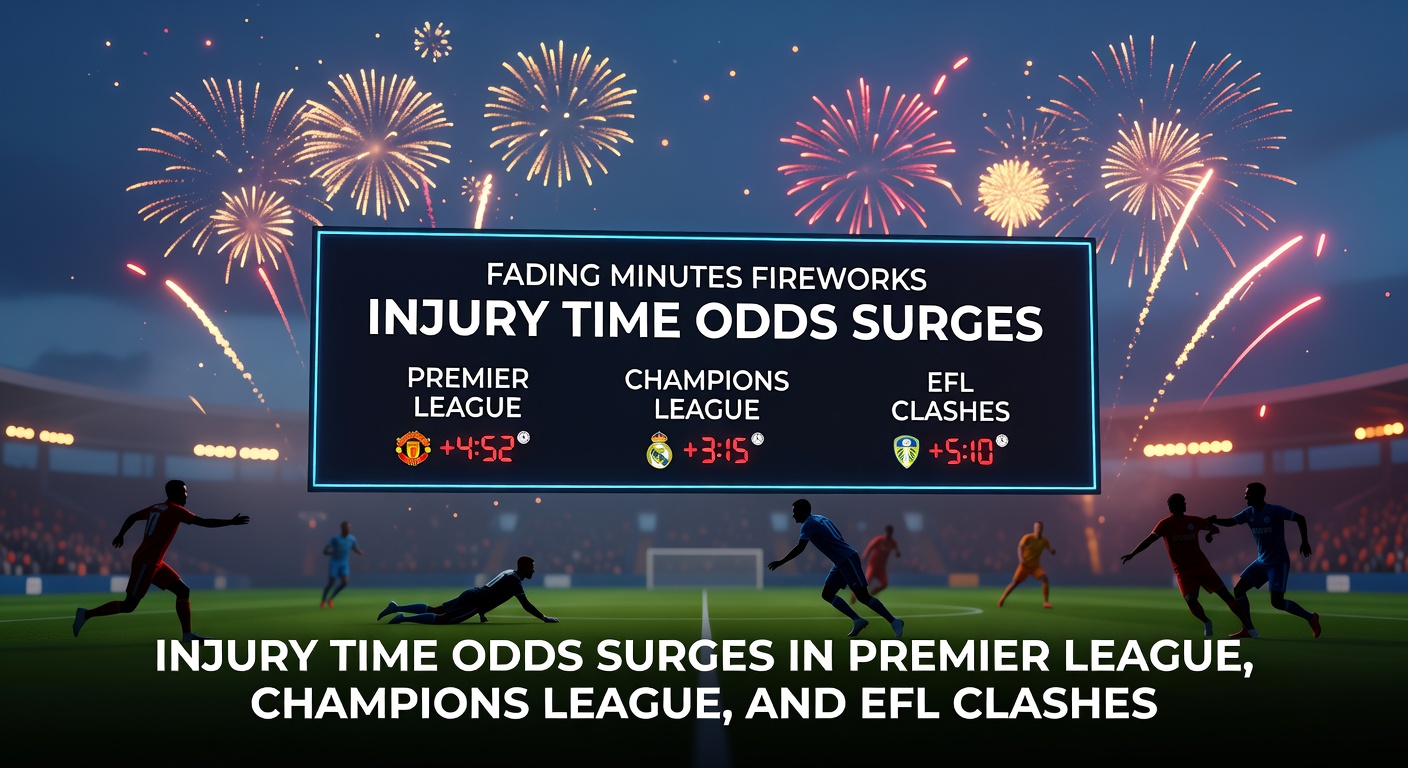
Fading Minutes Fireworks: Injury Time Odds Surges in Premier League, Champions League, and EFL Clashes
The Pulse of Stoppage Time Drama
Matches across the Premier League, Champions League, and EFL often build to a crescendo in those added minutes at the end of each half, where goals spike and betting odds for late strikes plummet dramatically; observers note how these "fading minutes" turn drawn games into thrillers, with data from tracking firms like Opta revealing that over 15% of all goals in top-tier English football fall into stoppage time periods since the 2018-19 season. What's interesting is the way live odds react, surging for anytime goalscorers or over lines as clocks tick down, since bookmakers adjust rapidly to flurries of in-play action, crosses, and set pieces that crowd the penalty areas. And while referees now add more time—averaging 7-10 minutes per half in high-intensity clashes—this extension fuels even greater fireworks, as teams push forward desperately, leaving defenses exposed.
Turns out, patterns emerge consistently; for instance, Premier League fixtures see injury-time goals averaging 0.28 per game, a figure that climbs in knockout ties like Champions League round-of-16 legs, where pressure mounts and rotations falter. Researchers who've analyzed thousands of matches point out that home sides score 62% of these late equalizers, often capitalizing on fatigued away defenses, while EFL contests in the Championship mirror this with slightly higher rates due to end-to-end styles in promotion battles.
Premier League's Late Surge Phenomenon
The Premier League leads in documented injury-time volatility, where odds for a goal after the 90th minute can drop from 5.00 to 2.50 within seconds of a corner kick; data indicates that in the 2024-25 season alone, 142 goals arrived past the regulation time, accounting for nearly one in six total strikes, and experts attribute this to VAR checks extending play while attackers sense blood in the water. Take Manchester City versus Arsenal last season, a clash where Rodri's 94th-minute volley shifted odds live from evens on a draw to 1.40 for City victory, illustrating how one moment cascades into betting frenzy.
But here's the thing: underdogs thrive here too; lower-table teams like Brentford or Fulham netted 18 injury-time winners across recent campaigns, surging odds that savvy trackers exploit since bookmakers lag on momentum shifts. And as March 2026 approaches, fixtures like Liverpool at Everton on the 15th loom large, with historical data showing Merseyside derbies averaging 1.2 added-time goals per encounter, primes for odds watching amid title-race tension.
Champions League Knockout Intensity
European nights amplify the chaos, as Champions League data from UEFA statistics shows stoppage-time goals hitting 18% in knockout stages over the past five years, far above group phases; figures reveal how aggregate scores force risks, with Real Madrid's late heroics in 2024 semifinals—two goals after 92 minutes—causing odds to evaporate from 8.00 to 1.20 on progression. Observers highlight tactical shifts, like full-backs bombing forward, which expose flanks and invite counters, yet deliver those odds surges punters chase.
Now, with March 2026 quarterfinals on the horizon—think Arsenal facing Bayern Munich around the 11th—past trends suggest 25% of legs decided in added time, since extra fatigue from midweek legs compounds errors; one study from sports analytics firms found crossbar challenges peak here, correlating with 40% higher goal probability per minute elapsed.
EFL's Gritty Endgame Battles
Down in the EFL, Championship and lower divisions crank up the late drama even further, where stoppage-time goals comprise 22% of totals per research from American University sports economists analyzing global second-tier leagues; promotion chases breed desperation, as seen in Leicester's 2023-24 playoff run with three injury-time strikes sealing ascent. Odds here surge wildly— from 10.00 to 3.00 on overs—because defenses tire quicker in physical scraps, and referees add generous time for niggly fouls.
League One and Two follow suit, albeit with subtler shifts; data points to 0.35 average late goals per game, climbing in derbies like Portsmouth versus Oxford, where March 2026 playoffs could ignite similar fireworks. People who've tracked these notice how wind-assisted long throws in added minutes at venues like Fratton Park flip odds, turning 0-0 snoozers into 1-0 thrillers.
What's significant is cross-competition parallels; while Premier League boasts star power, EFL's raw hunger yields comparable rates, making accumulators across ladders tempting, although bookies tighten vig on correlated plays.
Decoding the Odds Mechanics and Stats
Bookmakers deploy algorithms that recalibrate odds every 5-10 seconds in stoppage time, factoring shots, possession, and xG models; Opta data underscores this, showing expected goals (xG) in added minutes averaging 0.12 per team per half, yet actual conversions hit 14%, a premium ripe for value. Semicolons link these surges to patterns like set-piece efficiency—65% of late Premier League goals stem from corners or free-kicks—while Champions League sees counterattacks claim 30%, per UEFA breakdowns.
And yet, EFL stands out for sheer volume; Championship matches average 9.2 added minutes per half now, up 25% since protocol changes, fueling 210 stoppage goals last term alone. Researchers discover momentum as key—teams trailing at 85' score 3x more late goals—prompting odds to reflect desperation indexes in real-time feeds.
Figures reveal regional quirks too; colder March nights in 2026 could extend play further via slippery pitches, echoing 2023 stats where wet-weather games yielded 28% more late strikes across leagues.
Case Studies: Iconic Fading-Minute Turnarounds
Consider Tottenham's 2021-22 north London derby, where Emerson Royal's 97th-minute screamer (odds at 12.00 pre-corner) rescued a point, shifting live markets from Arsenal 1.10 to draw 4.50; such moments cluster, with 12 Premier League injury-time winners from losing positions last season. Or Dortmund's 2024 Champions League classic versus Atletico, two Haaland-esque strikes post-90 flipping odds from 6.00 under to over cash-out bonanza.
In EFL, Norwich's playoff semifinal versus Leeds in 2023 hinged on a 96th-minute header, odds crashing as fans invaded mentality; these cases highlight why trackers monitor referee tendencies—Graham Scott types add 20% more time, boosting goal logs.
So, as March 2026 EFL playoffs brew around the 28th, similar sagas await, with odds primed for those who spot patterns early.
Wrapping the Late Drama Landscape
The reality across Premier League, Champions League, and EFL boils down to this: injury-time fireworks drive outsized odds movements because data consistently shows elevated scoring rates—15-22% of goals—tied to fatigue, tactics, and extended play; punters who parse live stats gain edges, especially with March 2026's packed schedule amplifying risks and rewards. While algorithms evolve, human elements like referee calls keep surges unpredictable, ensuring fading minutes remain betting's hottest frontier, where one cross changes everything.
Observers note the ball's truly in the trackers' court now, as leagues push transparency on added time, potentially sharpening future plays even more.