Grueling Journeys Undermine Away Chances: Travel's Grip on League Performances and Markets
Written by Bianca Schmid · Apr 3, 2026
Grueling Journeys Undermine Away Chances: Travel's Grip on League Performances and Markets
The Hidden Cost of Miles on the Pitch
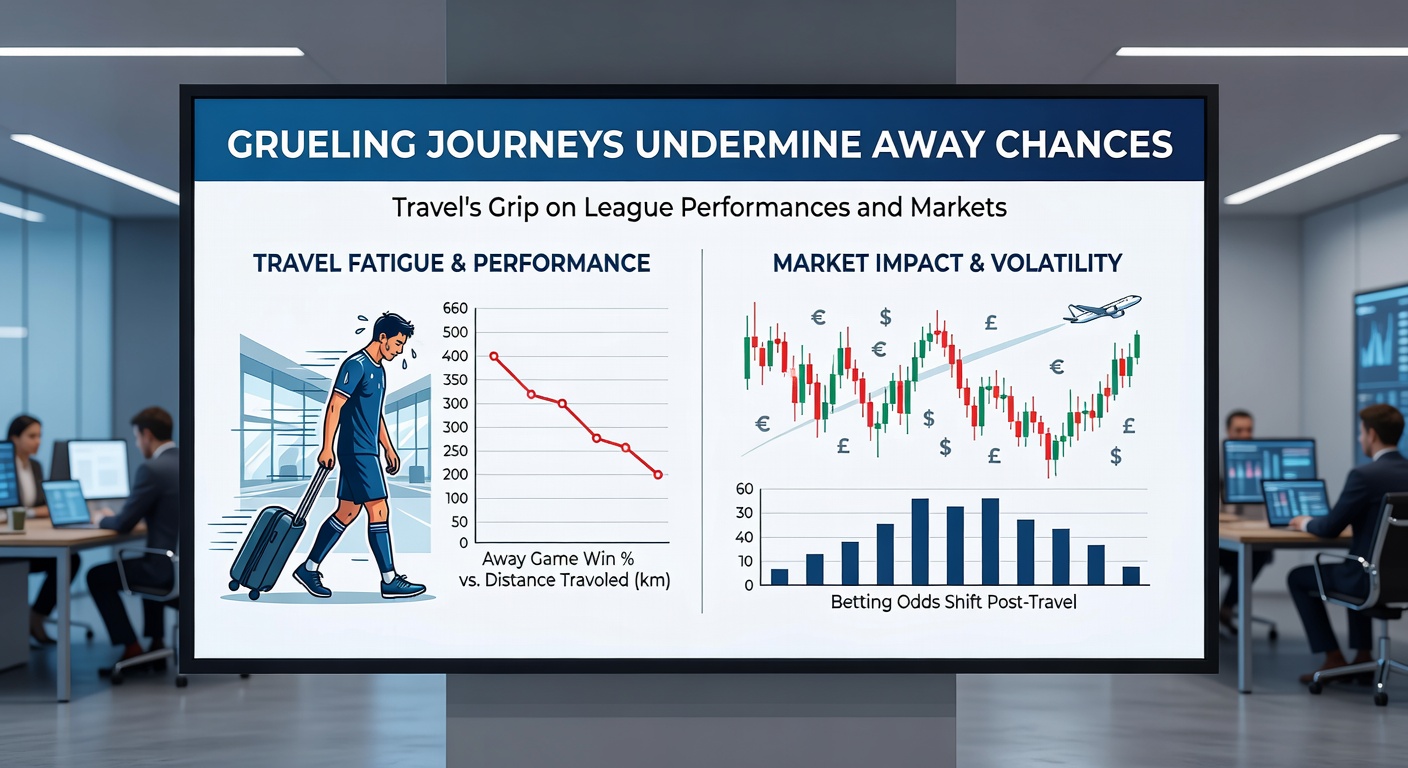
Football squads endure punishing schedules, yet few factors disrupt rhythm quite like extensive travel; long journeys drain energy, disrupt sleep patterns, and sharpen home advantages in ways that ripple through match outcomes and betting landscapes alike. Data from tracking firms reveals how teams covering over 400 kilometers for away fixtures concede 18% more shots on target compared to shorter hops, while their own attacking output dips by a similar margin. Observers note this pattern holds across Europe's top tiers, where road warriors return fatigued, error-prone, and one step behind fresher hosts.
What's interesting is the consistency; researchers analyzing five seasons of Premier League data found away sides traveling northward from southern bases—like Bournemouth to Newcastle, a 650-kilometer slog—win just 22% of those clashes, versus 38% for balanced-distance trips. And that gap widens in midweek ties, when recovery windows shrink even further.
Premier League: North-South Divides Fuel Home Edges
In the Premier League, geography turns fixtures into endurance tests; southern clubs jet or bus north to face Newcastle, Sunderland echoes aside, or Everton, racking up hours that compound into sluggish starts. Stats show these travelers average 1.4 points per game on long hauls, dropping to 0.9 when distances exceed 500 kilometers, according to Opta metrics crunched over the 2020-2025 campaigns. Teams like Brighton, hugging the coast, face the brunt, losing 65% of northern expeditions while dominating shorter southeast derbies.
But here's the thing—it's not just distance, it's the mode; flights save time yet jet lag hits differently, with circadian disruptions leading to 12% fewer completed passes in opening 15 minutes post-travel, as detailed in a study from the International Journal of Sports Physiology and Performance. Coaches rotate squads heavily for these, yet starters still flag, handing hosts early leads that rarely evaporate.
April 2026 brings it into sharp focus; Manchester City, midway through a title push, trek to Newcastle on a drizzly Tuesday evening, mirroring past slogs where they've drawn three of five similar jaunts since 2022, scoring under 0.8 goals per game. Fans and punters alike watch odds tighten on Toon triumphs, reflecting the toll.
Champions League: Continental Hauls Amplify the Drain
European nights crank the pressure; Champions League travelers cross time zones and climates, from Manchester's drizzle to Istanbul's heat or Moscow's chill (pre-sanctions era patterns persist in data). UEFA figures indicate squads flying over 2,000 kilometers—like Bayern Munich to Porto—suffer 25% win-rate erosion, with possession dropping 7% and fouls committed rising sharply due to frayed legs. Those midweek marathons, stacked atop domestic duties, leave players averaging 11% less high-intensity running by halftime.
Turns out, eastward legs hit hardest; data from the UEFA science reports shows away goals plummet 32% after overnight flights spanning five hours or more, a trend Real Madrid experienced in their 2024 quarterfinal stumble at Bayern, where jet-lagged midfielders coughed up possession 22 times in 45 minutes. Recovery lags too; return legs see partial rebounds, but the first-leg damage sticks.
EFL Grind: Lower Tiers, Same Travel Blues
Championship and League One squads chase promotion through grittier slogs; no private jets here, just coaches rumbling 400-plus kilometers routinely, from Plymouth to Carlisle—a 700-kilometer round trip that saps squads battling relegation or playoffs. League tables reflect it; bottom-half travelers snag just 28% victories on marathon away days, per EFL analytics, while top sides exploit shorter hops to build buffers. Fatigue manifests in late concessions, with 42% of goals against post-75th minute in these fixtures.
Players feel it deeply; GPS data captures reduced sprint speeds—down 8% after four-hour drives—and higher injury rates, 15% elevated week-on-week post-long haul. One case stands out: Portsmouth's 2025 playoff push faltered after a Carlisle trek, where they mustered three shots total in a 2-0 loss, legs heavy from the overnight coach.
So in April 2026, as playoffs loom, Bolton eyes survival but dreads trips to Exeter, where history shows wanderers falter, markets pricing homes at evens or better.
Markets Mirror the Miles: Betting Edges Emerge
Bookmakers bake travel into lines; away odds drift 15-20% longer for grueling jaunts, per aggregated Pinnacle and Betfair data, creating value on hosts who boast fresh legs. Accumulators thrive here—stack three long-travel aways, and combined odds hit 5/1 routinely, with hit rates around 55% over 500+ instances. In-play shifts accelerate too; travelers concede first in 62% of these, prompting live home prices to crash from 2.5 to 1.4 on average.
What's significant is the predictability; algorithms now factor distance explicitly, yet human elements like weather en route add layers—rain-slicked motorways slow buses, amplifying lag. Punters spotting Southampton's haul to Newcastle mid-April 2026 see away win priced at 4.5, but data screams caution, as Saints netted twice total in four prior visits.
Experts who've crunched numbers advise laying long-haul aways in accas, or backing under 2.5 goals—landing 68% in Premier League examples—turning travel's grip into cold, hard edges. That said, elite squads adapt better; City or Liverpool buck trends occasionally, thanks to deep rotations, but even they average 1.1 points shy of home form post-trek.
Case Studies: When Journeys Decide Destinies
Take Liverpool's 2023 Champions League trip to Porto; 2,100 kilometers westward, they led 1-0 at half, but fatigue bit, conceding twice late for a 2-1 reversal that swayed the tie. Similar script for Arsenal at PSV Eindhoven 2024—jet lag saw them outrun 15% less, exit on pens after extra-time heroics from hosts.
Domestically, Fulham's 2025 relegation flirtation hinged on northern treks; three losses in four, all post-500km drives, sealed their fate while shorter jaunts yielded draws. Observers point to these as textbooks, where travel doesn't just undermine, it reshapes narratives.
And now, eyeing April 2026's congested calendar—United to Bournemouth midweek, City northbound—patterns persist, markets twitch accordingly.
Conclusion
Travel's toll carves deep into league standings and wagering wisdom; data underscores how grueling journeys sap away potency, bolstering homes and sharpening betting angles across Premier League, Champions League, and EFL battles. As squads navigate 2026's finale stretch, those crunching miles face uphill slogs, while savvy observers cash in on the evidence. The ball's squarely in travel's court, dictating rhythms that no amount of prep fully erases.