How Broadcast Timings Quietly Shift Evening Fixture Markets and Accumulator Structures Across Competitions
Written by Bianca Schmid · May 28, 2026
How Broadcast Timings Quietly Shift Evening Fixture Markets and Accumulator Structures Across Competitions
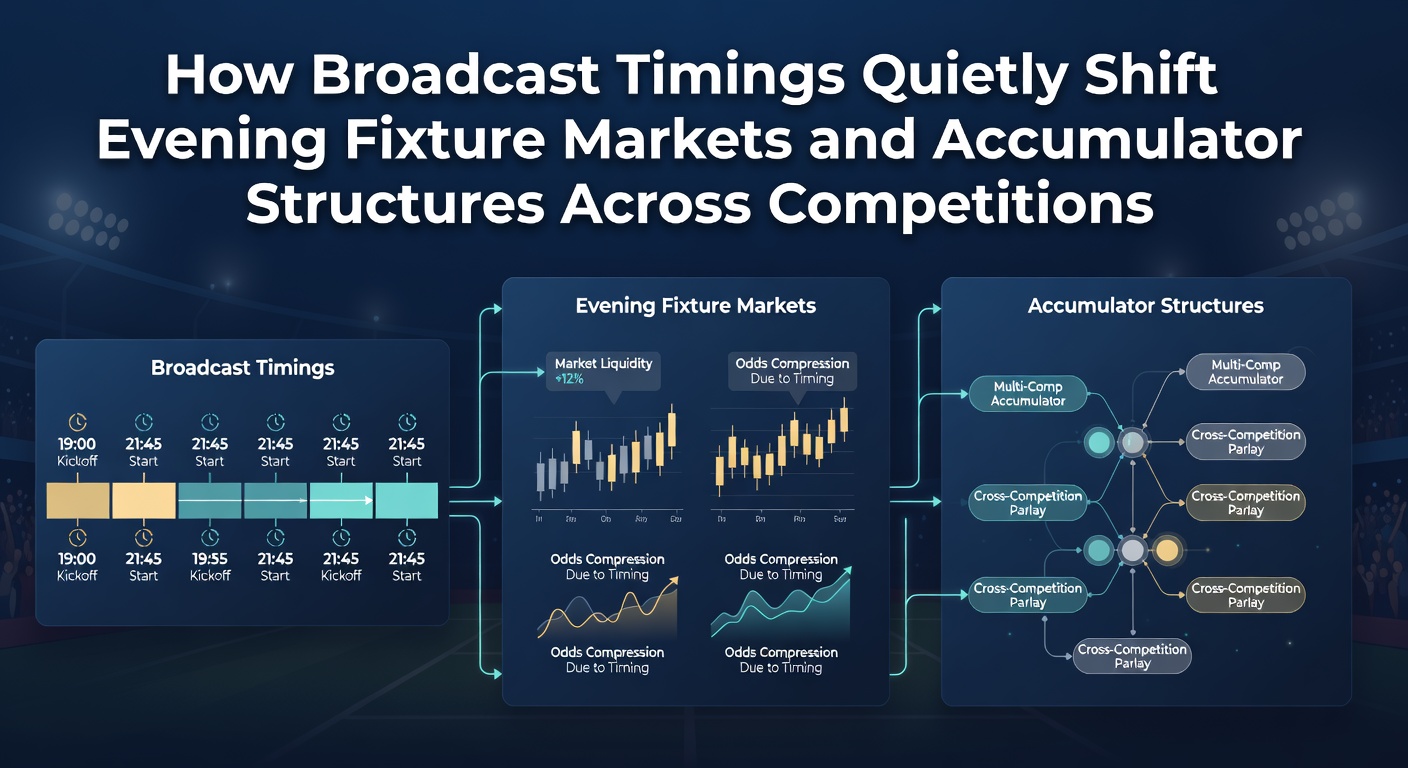
Broadcast networks finalize kickoff windows months ahead, and these decisions set the rhythm for how evening fixtures reach betting exchanges and bookmaker platforms across multiple leagues. Data from the 2025-26 season shows that matches starting after 8pm local time draw different liquidity patterns than those tipped for 6pm slots, particularly when they overlap with continental ties in the same week. Researchers tracking volume across major operators report steadier movement in over/under lines once the broadcast commitment locks in a later start, since teams adjust training loads and travel plans accordingly.
Evening slots in the Premier League often fall between 7:45pm and 8:15pm, while the Bundesliga and Serie A lean toward 8:45pm starts on their highlighted nights. These differences create staggered windows that reshape accumulator construction, because bettors assembling multi-leg slips must account for varying rest periods between games. Figures released by the European Club Association indicate that clubs participating in both domestic and European competitions face tighter recovery windows when broadcasters prioritize prime-time coverage, which in turn influences squad selection data released to the market.
Timing Overlaps and Market Liquidity
When two evening fixtures kick off within thirty minutes of each other, live odds adjust faster because liquidity pools merge across operators. Observers tracking Champions League group-stage evenings in autumn 2025 noted sharper swings in both-teams-to-score markets once the second game began, compared with isolated domestic fixtures. The same pattern repeats in May 2026 during the final weeks of league campaigns, when broadcasters compress schedules to accommodate title deciders and European finals on consecutive midweeks.
Accumulator builders respond by shifting emphasis toward earlier legs when timings allow, while holding later evening selections for totals rather than results. Studies compiled by sports economics teams at universities in Germany and Australia show that goal expectancy models gain predictive edge when they incorporate exact broadcast windows, because later starts correlate with measurable drops in high-intensity running metrics after the 70th minute.
Regional Scheduling and Accumulator Adjustments
La Liga tends to place its marquee evening games at 9pm CET on Sundays, creating a later close than most Premier League selections. This offset forces accumulator structures to adapt around Spanish defensive metrics that tighten under floodlights, according to performance datasets shared by La Liga technical staff. Bettors who follow these patterns often reposition their Spanish legs toward under 2.5 goals once the broadcast time is confirmed, since teams prioritize structure over open play in the final hour.
North American broadcasters sometimes request earlier evening starts for Champions League coverage, shifting certain knockout ties forward by an hour. Data collected during the 2025 knockout rounds revealed that these adjustments produced slight drifts in first-half result markets, because squads traveling across time zones encountered compressed preparation periods. Such changes ripple into multi-competition accumulators that combine domestic and European legs on the same slip.

Fixture Congestion in Late Season Windows
May 2026 brings particular pressure because the UEFA Champions League final sits alongside domestic title run-ins and relegation battles. Broadcasters lock evening slots for these high-profile matches, and the resulting fixture pile-up alters rest distributions for clubs still competing on multiple fronts. Performance analysts have documented how squads with midweek evening European commitments show measurable declines in pressing intensity during the following weekend's later domestic game.
Accumulator markets reflect these shifts through adjusted prices on clean-sheet selections and player-specific goalscorer lines. When two evening games run concurrently, bookmakers widen margins on correlated outcomes such as total goals across both ties, because the overlapping coverage increases in-play volume and reduces the time available for manual line corrections.
Travel and Recovery Data Integration
Clubs disclose travel schedules weeks in advance, yet broadcast timings determine the exact departure windows after evening fixtures. Research groups monitoring GPS data across top European leagues report that teams returning from away evening games exhibit slower recovery curves when the subsequent fixture also falls in a late slot. These patterns feed into pre-match odds, particularly for away performance markets in accumulators spanning several days.
Operators in Canada and Australia have begun publishing aggregated timing statistics that highlight how evening start times influence average match length and stoppage-time distributions. Bettors incorporate these datasets when structuring multi-league slips, moving selections toward draw-no-bet options once a later kickoff is locked in for a high-stakes encounter.
Conclusion
Broadcast commitments continue to shape the underlying conditions for evening fixtures, and the resulting market movements follow predictable pathways across competitions. Accumulator structures adapt in response to confirmed timings, rest metrics, and overlapping coverage windows. As the 2025-26 season reaches its May 2026 conclusion, these scheduling dynamics remain central to how odds evolve and how multi-leg positions are assembled.