How Packed Schedules Shape Live Football Odds and Accumulator Planning
Written by Sofia Patterson · Aug 27, 2026

How Packed Schedules Shape Live Football Odds and Accumulator Planning
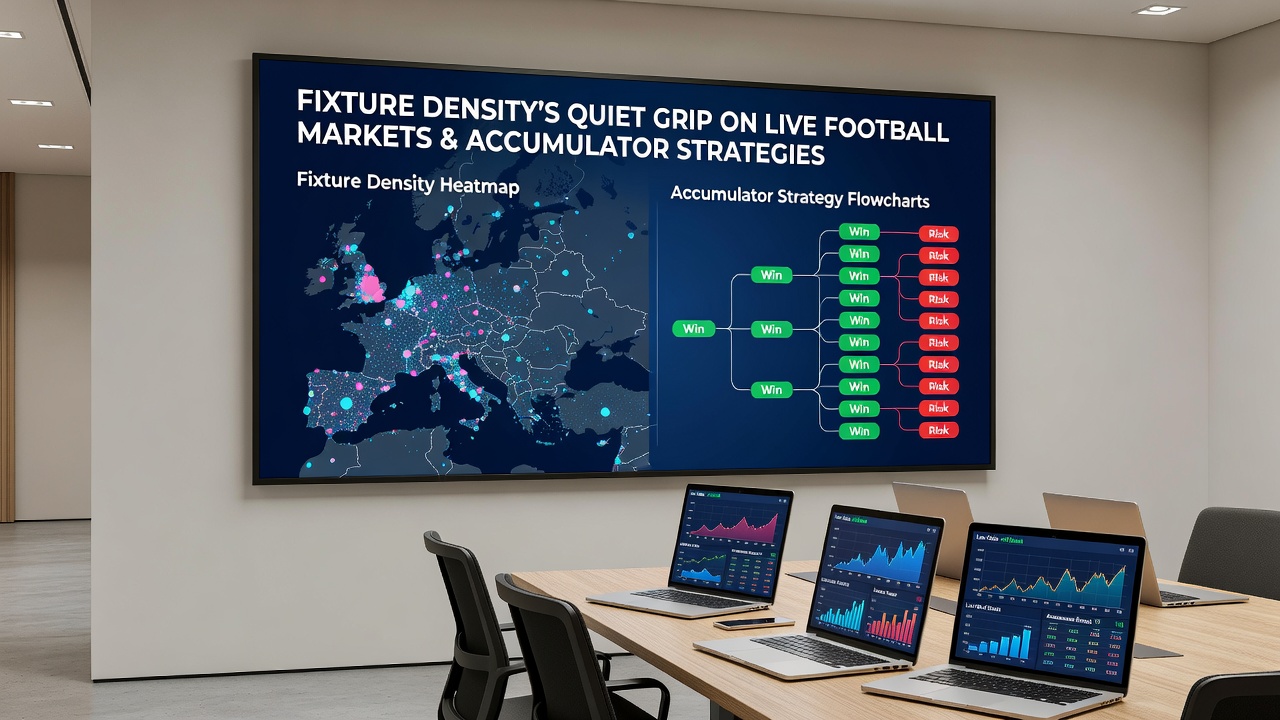
Fixture density refers to the clustering of matches within short timeframes, a pattern that has grown more pronounced across Europe's top divisions since the expansion of club competitions and international calendars. Observers note that clubs in the Premier League, Champions League, and EFL often face three or more fixtures inside seven days, which alters squad availability and influences both pre-match and in-play pricing.
Performance Patterns Under Congestion
Researchers tracking player workloads have documented measurable drops in high-intensity running and pass completion rates when teams play multiple games with limited recovery. These shifts appear in live markets as bookmakers adjust goal lines and player props mid-match, especially after the 60-minute mark when fatigue compounds. Data from scheduling analyses show that teams with four fixtures in 14 days concede more shots from distance, creating opportunities for markets that focus on total shots and corners rather than goals alone.
August 2026 brings an added layer because several clubs will navigate early domestic rounds alongside preparations for the expanded Club World Cup cycle. Figures from European scheduling reports indicate that mid-August windows carry elevated fixture overlap for sides progressing in European qualifiers, and those overlaps correlate with wider half-time score ranges in live betting interfaces.
Live Market Adjustments
Bookmakers respond to fixture density by widening spreads on player-specific markets such as tackles and interceptions once a team has played three matches in eight days. Live odds on over-unders for cards also move because referees issue more cautions in matches featuring two congested sides, according to patterns compiled by match data providers. Accumulator builders who monitor these movements often shift selections toward defensive metrics instead of goal scorers when lineups reveal heavy rotation.
Accumulator Construction Approaches
Accumulator strategies adapt by incorporating legs that reflect workload management rather than outright form. Builders frequently add corners or cards from teams on the second leg of a midweek-weekend double, because statistical models show those markets retain value even when goal tallies fall. Studies of past congested periods reveal that selections on total corners in the second half maintain steadier hit rates than first-half goal bets when both teams average under 48 hours recovery.
One approach involves layering under-2.5 goals with over-10.5 corners in matches where both clubs have played within 72 hours, a combination that has appeared in multiple seasons across the EFL Championship. Another tactic tracks team news for late changes, because managers often rest key attackers during dense spells, pushing live odds on anytime goalscorers upward after kickoff and creating entry points for in-play accumulator adjustments.
Regional and Competition Differences
Champions League group stages produce different congestion signatures than domestic leagues because travel distances amplify recovery demands. Reports compiled by the Australian Sports Commission on elite athlete scheduling note that trans-European flights correlate with reduced sprint outputs in the subsequent 48 hours, a factor reflected in live handicap markets that move in favor of home sides during midweek rounds. EFL sides, meanwhile, contend with denser Saturday-Tuesday-Saturday sequences, which betting exchanges capture through sharper movement on draw-no-bet options once lineups confirm rested starters.
Industry data from the International Journal of Sports Science & Coaching further highlights that fixture density influences not only physical metrics but also set-piece volume, because fatigued defenders commit more fouls inside the box. Accumulator builders who include set-piece related props in multi-leg bets during August and December windows have access to these recurring statistical edges.
Conclusion
Fixture density continues to exert steady pressure on live football markets by altering player output and squad selection patterns. Accumulator strategies that incorporate workload indicators, corner volumes, and card trends demonstrate measurable alignment with observed performance data across Europe's major competitions. As calendars remain crowded into 2026, market participants who track recovery windows and rotation signals maintain structured approaches to in-play and pre-match multi-leg construction.