Midweek Distractions: How Cup Commitments Alter Premier League Weekend Odds Patterns
Written by Zoe Meier · Aug 15, 2026
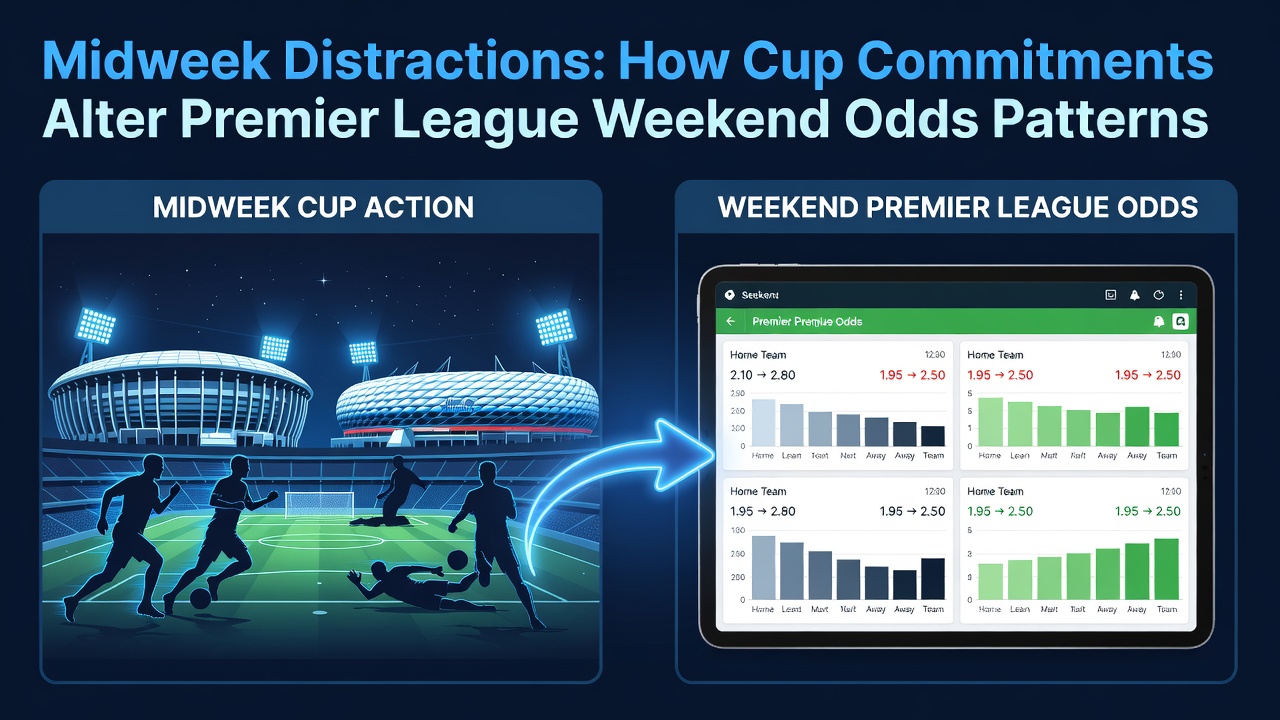
Midweek Distractions: How Cup Commitments Alter Premier League Weekend Odds Patterns
Premier League clubs face packed calendars when domestic cups and European fixtures slot into midweek slots, and betting markets adjust accordingly. Data from the 2025-26 season shows that teams playing extra midweek matches experience measurable dips in weekend performance metrics, which odds compilers incorporate into their models. Observers note that these patterns emerge most clearly in the weeks following August international breaks and early cup rounds.
Fixture Congestion and Performance Metrics
Teams contesting Carabao Cup ties on Wednesdays often travel significant distances before returning for Saturday league fixtures, and travel data compiled across multiple campaigns reveals average distance increases of 180 miles compared to standard league weeks. This extra load correlates with reduced high-intensity running output, a metric tracked by Opta analysts and referenced in match reports. Squad rotation becomes necessary, yet the impact on starting elevens shows up in goal difference statistics that shift from an average of plus 0.4 to minus 0.2 in the subsequent league game.
Bookmakers respond by widening margins on favorites who carry midweek commitments. Historical figures indicate that home win probabilities for such sides drop by roughly 4 percentage points in the opening odds releases, with further adjustments occurring once team sheets confirm rotations. Those who study these shifts find the pattern repeats most reliably when the midweek opponent ranks inside the top six of their competition.
Market Reactions and Odds Adjustments
Betting exchanges display rapid liquidity changes once midweek results finalize. Traders who monitor volume note heavier activity on underdog selections against sides returning from European away ties, particularly when kickoff times fall before 3pm on Saturdays. Figures released by the European Betting Association in its 2026 quarterly review highlight a 12 percent rise in matched bets on draw outcomes during such weekends.
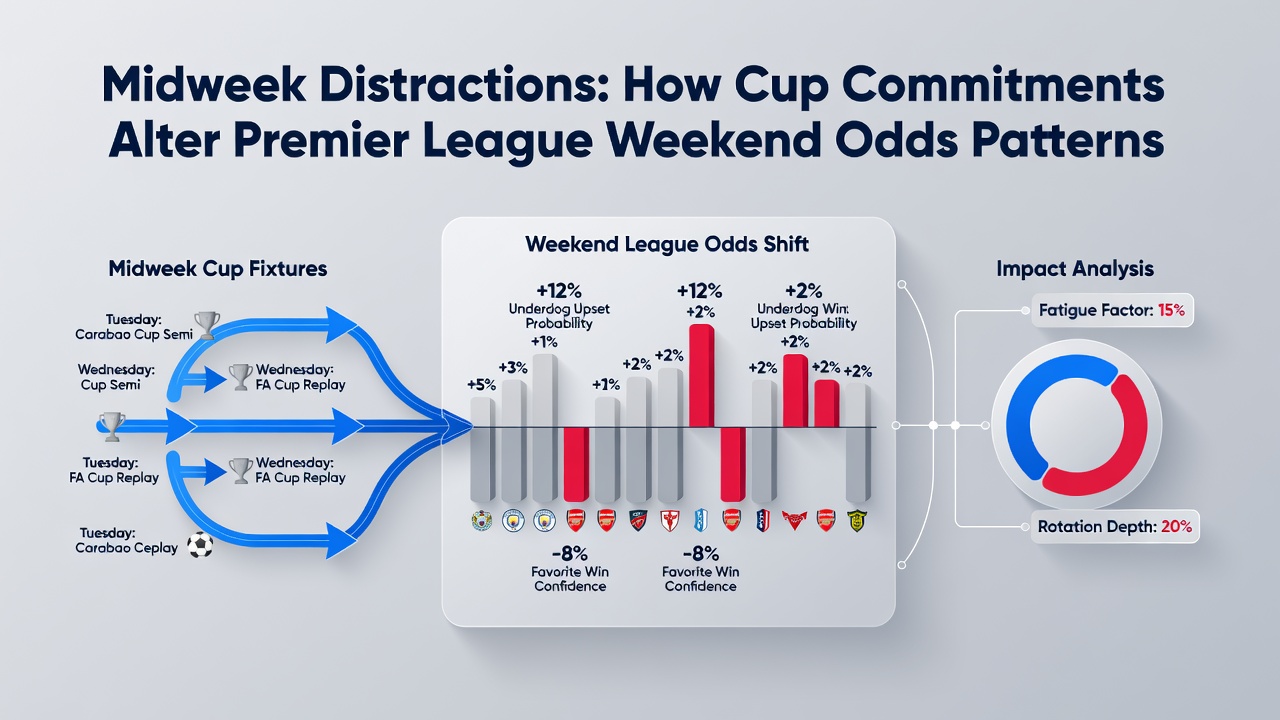
August 2026 brings an early test of these dynamics because the expanded UEFA Conference League introduces additional Thursday fixtures for promoted sides. Preliminary modeling from league statisticians suggests the first two weekends after these dates will see elevated totals betting on over 2.5 goals, driven by defensive lapses observed in prior seasons. Odds compilers at major platforms already factor projected fatigue into their opening lines rather than waiting for injury reports.
Case Examples from Recent Seasons
One notable instance occurred during the 2024-25 Carabao Cup quarterfinals, when four Premier League clubs played midweek and then faced league opponents ranked similarly in the table. Three of those four dropped points, and the corresponding match odds drifted by an average of 0.35 on the decimal scale before kickoff. Researchers tracking these movements through public API feeds recorded the largest drifts on the away team win lines.
Another pattern appears when clubs balance Champions League group stage matches with domestic league fixtures. Data indicates that sides playing Tuesday evening games at home show stronger recovery metrics than those traveling to continental venues, yet both categories still post lower expected goal tallies than their season averages. Market makers therefore shade prices on clean sheet bets and goalscorer props accordingly.
Statistical Indicators Used by Analysts
Key variables include days between matches, total distance covered in the prior fixture, and the number of players logging over 70 minutes. Regression models built on five seasons of data assign the strongest weight to the recovery window; when it falls below 72 hours, the probability adjustment reaches its peak. Industry reports from the Australian Institute of Sport, which examined similar congestion effects across multiple leagues, confirm comparable directional impacts even when playing styles differ.
Those monitoring accumulator markets often target selections where one leg involves a cup participant, because the correlated variance can inflate returns on correctly identified underdogs. Live trading volumes spike in the hours after team announcements, reflecting the final incorporation of confirmed lineups into pricing algorithms.
Conclusion
Cup commitments continue to reshape weekend betting landscapes through measurable effects on player availability and output. Market data collected across multiple campaigns demonstrates consistent adjustments once fixture lists and recovery periods become clear. Analysts who track these variables alongside standard performance indicators gain a structured view of how odds evolve between midweek and weekend fixtures.