Night Match Shadows: How Artificial Lighting Alters Live Market Movements in European Cup Ties
Written by Zoe Meier · Jul 9, 2026
Night Match Shadows: How Artificial Lighting Alters Live Market Movements in European Cup Ties
European Cup ties played under artificial lights present unique conditions that shape player visibility and decision making on the field, which in turn influences how live betting markets respond to unfolding events. Data from recent seasons shows that matches scheduled after sunset often feature distinct patterns in goal timing and disciplinary actions compared to daytime fixtures, prompting analysts to track these shifts closely as odds adjust in real time.
Stadium Lighting Requirements Across UEFA Competitions
UEFA mandates specific lux levels for venues hosting Champions League and Europa League games, with minimum standards ensuring consistent illumination across the pitch surface while allowing for variations in older stadiums that underwent retrofits. These requirements, updated periodically to account for technological advances in LED systems, create environments where shadows form differently depending on fixture angles and weather conditions at kickoff. Observers note that teams familiar with their home lighting setups tend to execute set pieces with greater precision, whereas visiting sides encounter adaptation periods lasting into the opening twenty minutes.
Player Performance Under Floodlights
Studies conducted by sports science departments at institutions like the German Sport University Cologne indicate that artificial lighting can affect depth perception and reaction times, particularly for players transitioning from natural daylight training sessions. Research tracking elite athletes across multiple European campaigns reveals measurable increases in error rates during high ball situations in the first half of night games, with midfielders and defenders showing the most pronounced adjustments. And yet these physiological responses also coincide with tactical shifts, as coaches often instruct teams to play shorter passes early on to minimize turnovers under the lights.
What's interesting here involves fatigue curves that accelerate differently when matches extend past ninety minutes, since floodlight heat combined with crowd noise sustains energy levels in some squads while draining others. Figures from the 2024-2025 season demonstrate that away teams in night European ties recorded slightly higher sprint distances in the final thirty minutes, suggesting compensatory efforts to overcome initial visual adjustments.
Live Market Reactions to Lighting Influenced Events
Betting exchanges and traditional bookmakers record accelerated odds movements when night matches produce unexpected defensive lapses or referee interventions that appear tied to visibility factors. In July 2026, as clubs prepared for the expanded league phase formats, pre-season data compilations highlighted how early season night fixtures generated sharper in-play volatility around corner counts and shot accuracy metrics. Market makers adjust lines accordingly because historical patterns show clusters of activity in specific time windows, such as between the 25th and 40th minutes when teams settle into the lighting conditions.
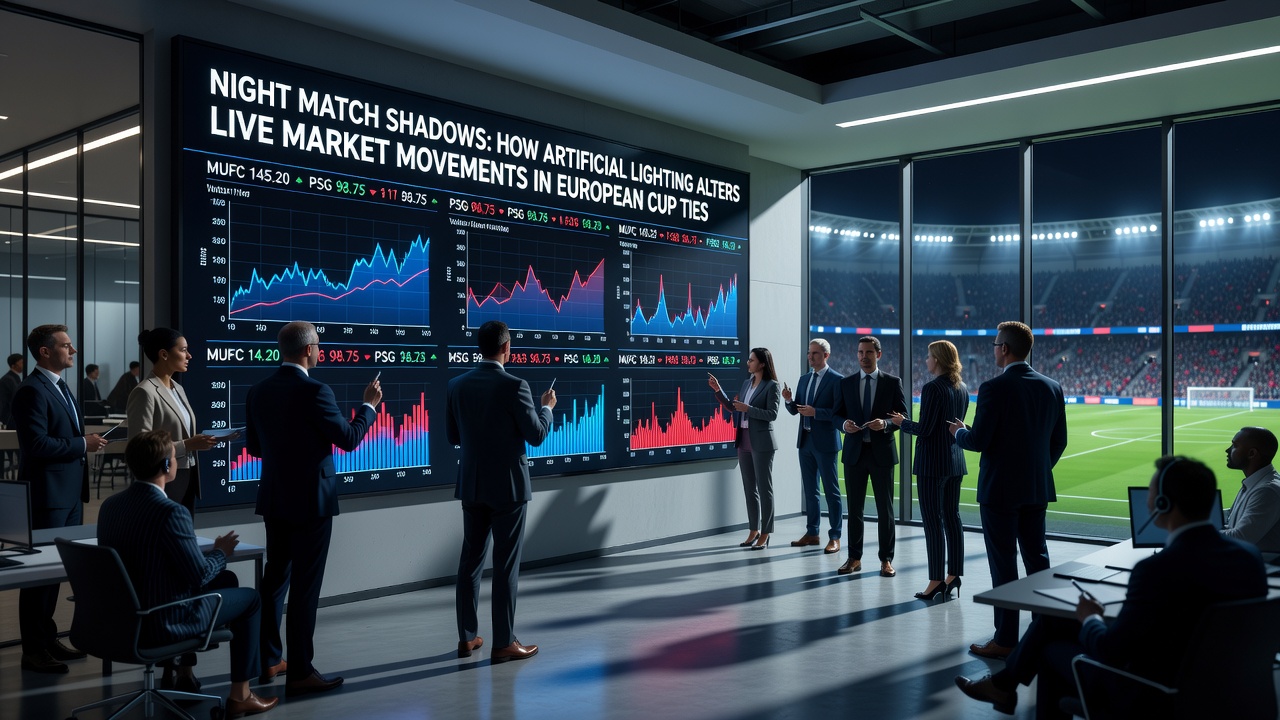
But here's the thing: these adjustments extend beyond simple goal markets into card and corner segments where officials' sightlines under varying light temperatures play a documented role. Data compiled by the European Club Association shows correlations between certain stadium lighting profiles and increased stoppage time awards, which traders monitor through specialized software feeds that flag deviations from daytime averages.
Case Examples from Recent European Ties
One notable instance occurred during a 2025 Champions League knockout encounter where a visiting side conceded twice in quick succession after struggling with long diagonal passes under intense overhead lighting. The sequence triggered rapid recalibrations across multiple live platforms as accumulators incorporating both teams to score and over 2.5 goals gained traction. Similar patterns emerged in Europa League group stage matches involving clubs from northern Europe, where cooler evening temperatures combined with artificial light created drier pitch surfaces that favored quicker transitions.
Researchers at the University of Barcelona have examined footage from over 200 night fixtures and identified recurring zones on the pitch where shadows cluster, leading to measurable drops in successful through ball completions. These zones shift based on floodlight configurations, prompting some technical staffs to rehearse specific drills that account for the visual challenges unique to each venue.
Technological Adaptations and Future Trends
Advancements in dynamic lighting systems allow stadium operators to fine tune brightness levels mid match, a development that gained traction after 2023 regulatory updates from European sports governing bodies. Such adjustments influence how television broadcasts capture action and subsequently how viewers interpret events that feed into betting decisions. Analysts tracking these variables note that venues equipped with newer LED arrays produce fewer disruptive glare incidents, resulting in smoother market evolutions during critical passages of play.
According to reports from the Australian Institute of Sport on international lighting standards, consistent application across competitions reduces variables that otherwise amplify late game volatility in European ties. Clubs investing in portable training lights designed to replicate match conditions report faster adaptation rates among squad members, which carries through to steadier statistical outputs once games begin.
Conclusion
Artificial lighting in European Cup ties continues to intersect with live market dynamics through its effects on visibility, player responses, and officiating patterns. Data gathered across multiple seasons underscores these connections without suggesting causation in every instance, while ongoing technological refinements promise further evolution in how such matches unfold and how markets respond. Observers tracking these elements gain clearer perspectives when combining performance metrics with venue specific lighting profiles.