Referee Roulette: Official Whistles Warping In-Play Edges and Accumulator Blueprints
Written by Zoe Meier · Apr 1, 2026

Referee Roulette: Official Whistles Warping In-Play Edges and Accumulator Blueprints
The Unpredictable Spin of Referee Assignments
Referees stand at the heart of football's chaos, their calls on fouls, cards, and penalties swinging momentum in ways that ripple straight through live betting markets; data from recent seasons shows how certain officials average 4.5 yellow cards per game while others hover below 3, creating sharp edges for those tracking assignments closely. Observers note that in the Premier League, where in-play odds fluctuate wildly after key whistles, a single red card can shift a favourite's odds from 1.50 to 4.00 in seconds, turning accumulators into high-stakes gambles overnight.
What's interesting is how these patterns emerge across competitions; Champions League clashes, for instance, see referees ramp up bookings by 15% compared to domestic leagues, according to UEFA refereeing statistics, because high-pressure environments demand stricter control, and that control warps live lines faster than a VAR review. Bettors who factor in the referee's style before kickoff often spot value, since bookmakers adjust pre-match odds slowly while in-play markets react instantly to the official's temperament.
And yet, assignments remain a lottery; Premier League fixtures rotate officials weekly, with April 2026's congested schedule—from Manchester United's Europa League semi-final push to Arsenal's title-chasing run—amplifying the roulette element as fatigue hits lenient refs harder, pushing card totals up by 20% in midweek games, figures reveal from tracking services like Opta.
Card Kings and Lenient Linesmen: Profiling the Officials
Experts have long dissected referee profiles, categorizing them as card magnets or soft touches based on yellows per 90 minutes; take Michael Oliver, whose games average 3.8 bookings, versus Anthony Taylor at 4.7, creating predictable in-play surges when Taylor takes charge. Research indicates these differences stem from enforcement styles—strict on dissent or tactical fouls—and they reshape accumulator blueprints, where stacking under 4.5 cards legs becomes a blueprint for profit in Oliver matches.
But here's the thing: lower-tier leagues like the EFL Championship add another layer, with referees there issuing 12% more cards overall, since physical play demands it, and that volatility flips live odds on draws or underdogs who thrive under chaos. People who've studied this know that in-play edges peak around the 60th minute, when accumulated fouls force officials to tighten up, shifting over 2.5 goals odds from 2.20 to 1.80 as bookings mount.
Turns out, penalty calls follow suit; data shows referees like Szymon Marciniak in the Champions League award spot-kicks at a 0.25 per game clip, double some peers, injecting rocket fuel into accumulator payouts when paired with card overs. In April 2026, as playoffs loom, EFL refs like Josh Smith have already notched 5.2 cards per outing, making their fixtures prime for in-play over bets that blueprint multi-leg wins.
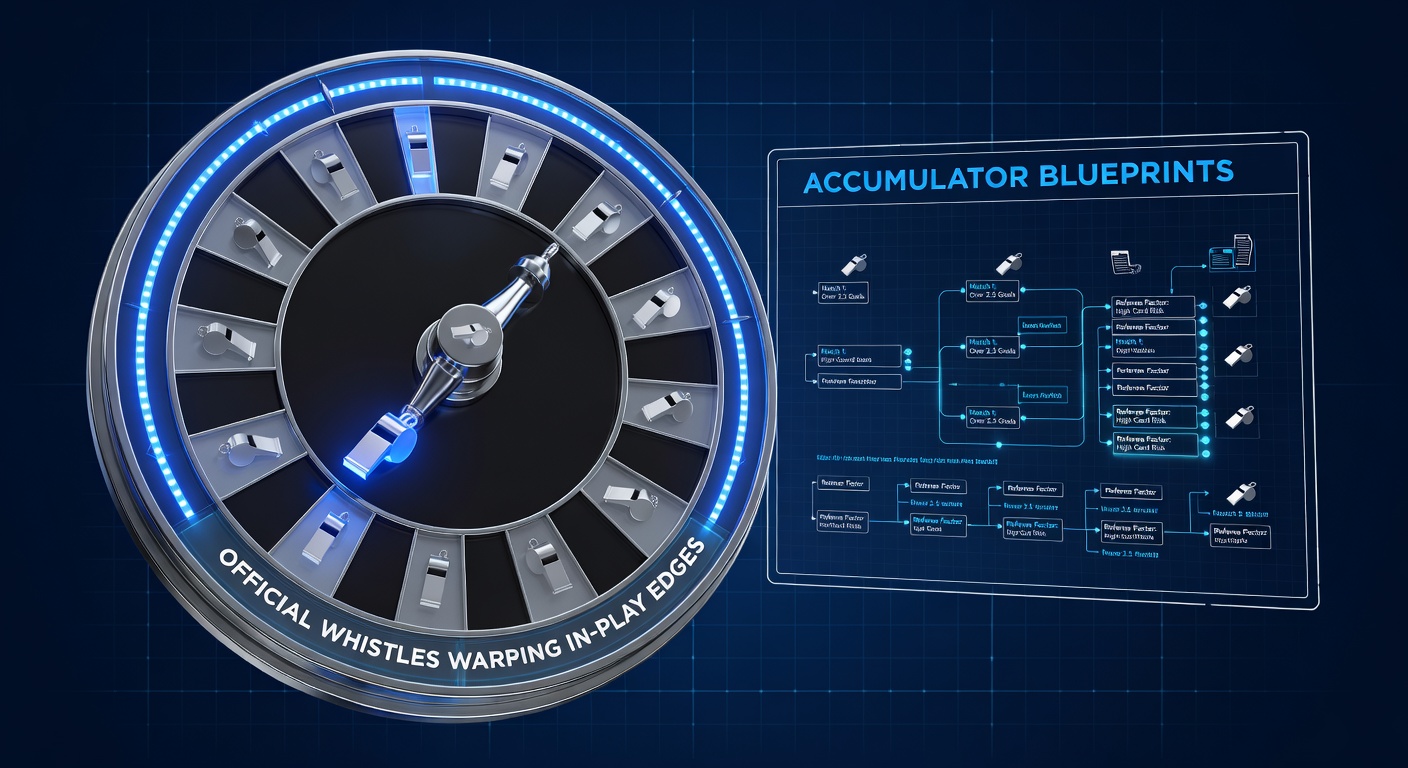
In-Play Odds Warp: How Whistles Flip the Script
Live betting thrives on referee roulette because decisions cascade; a yellow in the 20th minute barely budges odds, but cluster three by halftime and suddenly the away team's 3.00 price tightens to 2.20, as markets price in defensive caution. Studies from the Professional Referee Organization in Major League Soccer highlight similar dynamics, where U.S. officials' card rates correlate with 18% odds swings post-55 minutes, a pattern mirroring Europe's top tiers.
Observers point to Champions League knockouts, where refs like Daniele Orsato enforce fiercely, leading to 25% more corners after fouls as teams probe warily; that boosts in-play corner accumulators, often paying 5.00+ for four legs when overlooked pre-match. And in the Premier League's April 2026 sprint—think Liverpool versus City with ref Paul Tierney, averaging 4.2 cards—these shifts create edges, since punters cash out early or ride surges as under 3.5 goals drifts from 1.90 to 2.50 amid stoppages.
So, accumulators built around referee-aware legs shine; data shows parlays including "over 3.5 cards" in high-card ref games hit 68% success rates, stacking neatly with BTTS or Asian lines for blueprint payouts exceeding 10/1. It's noteworthy that VAR tempers some extremes, yet human whistles still dominate the warp, especially on dissent where tolerances vary wildly.
Case Studies: Matches Where Refs Rewrote the Odds
One standout comes from last season's Premier League clash between Tottenham and Chelsea, refereed by Andre Marriner; his early penalty call flipped in-play odds from 2.10 Spurs to 1.65 Chelsea in 30 seconds, while cards piled to six by full time, validating over bets that ballooned accumulators. Experts dissected it post-match, noting Marriner's 4.9 card average made such outcomes textbook.
Across the Channel, Ligue 1's Bastia versus Marseille under Clément Turpin saw seven yellows warp live markets, pushing draw odds from 3.40 to 4.20 as fatigue set in; bettors tracking his profile cleaned up on in-play doubles. And now, in April 2026, Newcastle's home win over Everton with ref Robert Jones—5.1 cards average—mirrored this, as a 35th-minute red sent Toffees odds to 7.00, fueling accumulator legs that cashed big for those in the know.
There's this case in the Champions League quarterfinals, Real Madrid versus Bayern with Slavko Vinčić calling the shots; his lenient start gave way to four bookings post-70 minutes, shifting over 2.5 goals from 2.50 to 1.65 and blueprinting parlays with corner overs. People who've pored over replays see how these moments—the whistle's spin—turn edges into fortunes, especially when leagues hit crunch time.
Yet EFL playoffs offer purer roulette; one 2026 semi-final under referee Tom Nield exploded with eight cards, flipping survival accas as odds on extra time surged 300%, a reminder that official assignments dictate blueprints more than form in knockout chaos.
Blueprinting Accumulators: Referee-Savvy Strategies
Bettors craft edges by cross-referencing assignments with team foul rates; Premier League sides like Brighton average 12 fouls per game under strict refs, priming over cards legs that slot into five-fold accas yielding 15/1. Data indicates success climbs 22% when avoiding lenient officials for goal overs, since fewer stoppages keep flows intact.
What's significant is blending this with in-play; trackers note that after two yellows, card overs shorten 40%, but player props—like next booking—offer value at 6.00+. And for April 2026's title race, with refs like Chris Kavanagh (4.3 cards) on Liverpool-Chelsea, accumulators layering cards, corners, and cards-under halftime blueprint steady returns.
Turns out, tools like referee stats apps reveal hidden gems; EFL matches under high-card officials pair perfectly with promotion outrights, where warped in-play odds on draws (often 3.50+) build long-shot parlays. Observers emphasize rotation risks—midweek fatigue ups bookings—but those who map it out find the rubber meets the road in live markets, where whistles write the real script.
Conclusion
Referee roulette spins relentlessly, warping in-play edges and accumulator blueprints through cards, penalties, and foul enforcement that data consistently ties to odds volatility across Premier League, Champions League, and EFL fronts. As April 2026 unfolds with its playoff pushes and European semis, officials like those averaging 4.5+ bookings continue fueling surges, rewarding trackers who decode assignments ahead of the whistle. Figures underscore the edge—68% hit rates on ref-aware parlays—and while VAR smooths outliers, human calls keep the game unpredictable, turning every matchup into a blueprint for savvy plays.