Squad Depth Dynamics: How Youth Integration Strategies Alter Promotion Markets in the EFL
Written by Freya Vogel · Jul 18, 2026
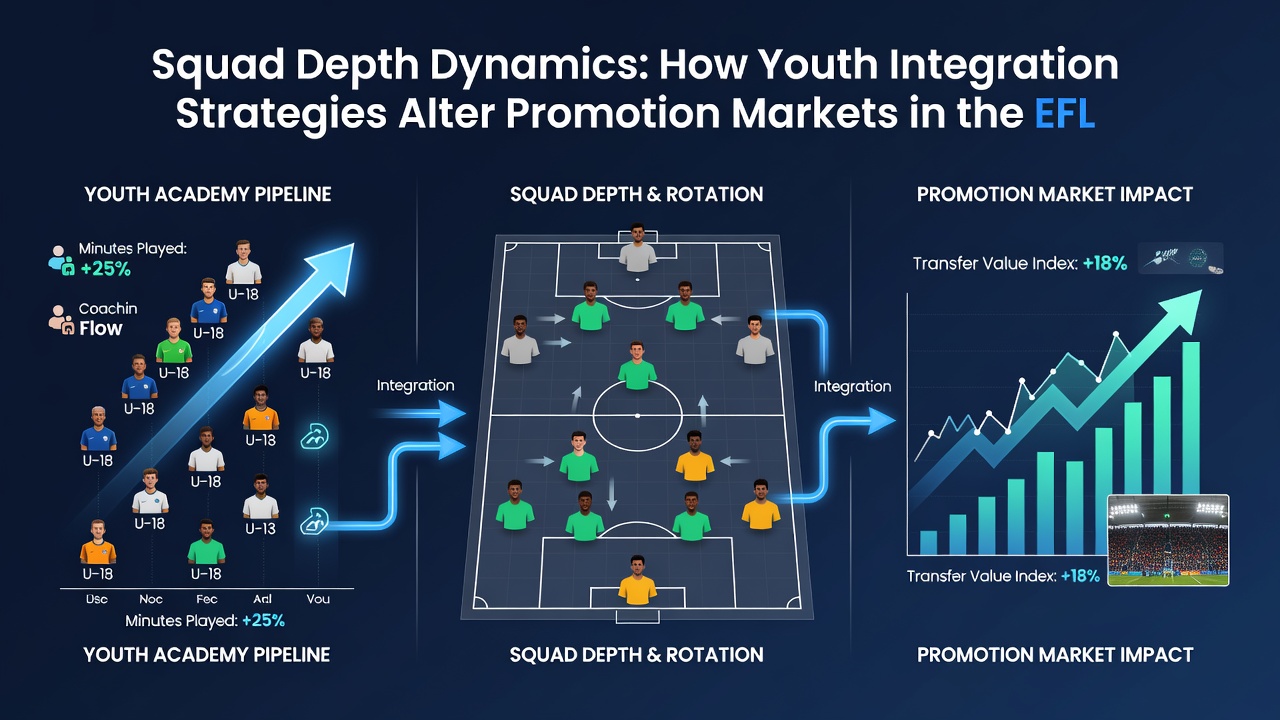
Squad Depth Dynamics: How Youth Integration Strategies Alter Promotion Markets in the EFL
Clubs across the English Football League have expanded youth integration programs in recent seasons, and data from multiple campaigns shows measurable effects on squad depth and promotion outcomes. Teams that allocate significant minutes to academy graduates often maintain fresher rosters through congested schedules, which in turn influences both on-pitch results and the markets that price promotion races.
Investment Patterns in Academy Systems
League Two and League One sides have directed increased resources toward Category 3 and Category 4 academies since the 2023-24 season, while Championship clubs have refined loan pathways that keep under-21 players within their ecosystems. Figures compiled by the EFL indicate that the average number of academy minutes per match rose from 12.4 in 2021-22 to 19.7 by the end of 2024-25, with the trend continuing into the 2025-26 campaign.
These investments produce measurable squad depth because young players cover multiple positions and reduce the need for emergency transfers during injury clusters. Clubs that integrate three or more academy products into regular matchday squads report lower average squad ages and reduced wage bills, freeing budget for targeted senior additions that strengthen promotion pushes.
Performance Metrics and Promotion Outcomes
Statistical reviews of the past five seasons reveal that sides finishing in the top six of the Championship recorded an average of 22 percent more under-23 appearances than mid-table teams. In League One, the pattern holds: the four teams promoted via the playoffs in 2024-25 featured academy graduates in 28 percent of total minutes across the regular season, compared with 15 percent for the bottom eight clubs.
The correlation extends to League Two, where data from the same period shows that clubs with structured youth pathways secured 1.8 additional points per game on average when they started at least two academy products. These patterns emerge because integrated squads maintain tactical continuity even when senior players rotate, limiting the dips that often derail promotion campaigns.
Market Implications for Promotion Betting
Bookmakers have adjusted outright promotion odds to reflect squad depth profiles, and observers tracking the 2025-26 season note earlier movement in lines for clubs with proven youth pathways. When a team announces extended contracts for academy talents or confirms permanent signings from loan spells, markets frequently shift within 48 hours as bettors factor the added depth into their calculations.
One analysis of Championship outright markets from August 2025 to January 2026 shows that clubs increasing under-21 minutes by more than 15 percent from the prior season experienced average odds compression of 2.3 points in promotion betting. This compression occurs because depth reduces the impact of fixture congestion and international breaks, factors that previously produced late-season drops in form.
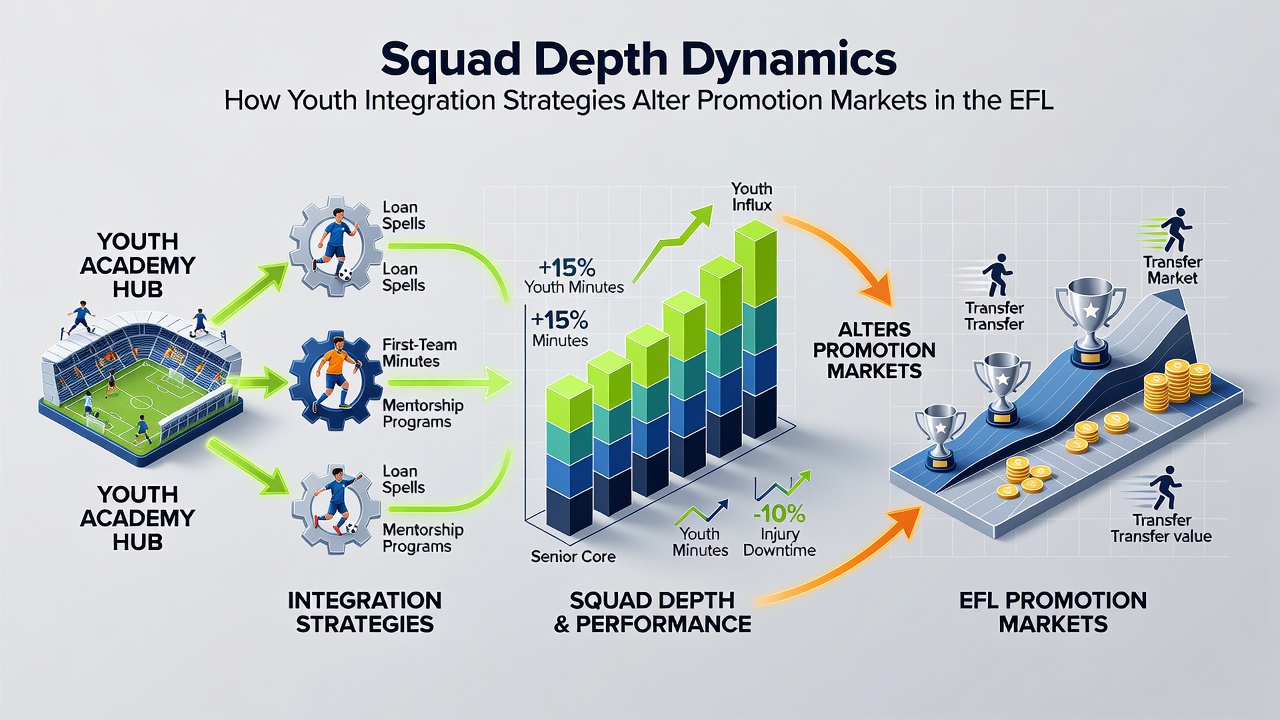
Regional Examples and July 2026 Context
During the summer window of July 2026, several Championship clubs confirmed permanent deals for players who had progressed through their academies after successful loan spells in League One. These transactions coincided with updated promotion outrights that priced those clubs more competitively than teams relying primarily on senior recruitment. Data released by the UEFA Club Licensing Benchmarking Report supports the view that structured youth pathways correlate with sustained competitive performance across European second tiers.
In League Two, clubs that retained academy graduates rather than selling them for immediate profit have posted stronger mid-season form in recent years. One study conducted by researchers at Australian Institute of Sport examined squad age structures across multiple leagues and found that teams balancing senior experience with 18-22-year-old minutes recorded fewer performance collapses after the winter period.
Challenges and Adaptation Strategies
Integration does not guarantee promotion, and clubs must balance youth minutes with results pressure. Managers who introduce academy players too rapidly sometimes face short-term dips that lengthen promotion odds, while those who phase introductions gradually tend to see steadier market support. EFL regulations on homegrown player quotas continue to shape these decisions, requiring clubs to meet minimum thresholds that reward long-term academy investment over short-term senior signings.
Teams adapting their recruitment to complement youth pathways, rather than replace them, demonstrate the most consistent promotion trajectories. This approach maintains depth across multiple competitions and reduces vulnerability to the fixture pile-ups that define the March-to-May period in all three EFL divisions.
Conclusion
Youth integration strategies have become a measurable variable in EFL promotion races, with data showing clear links between academy minutes, squad depth, and final league positions. As clubs continue to refine these approaches through the 2026 window and beyond, promotion markets reflect the resulting depth profiles with increasing precision. The pattern holds across League Two, League One, and the Championship, underscoring how sustained investment in young players alters both on-field outcomes and the markets that price them.