The Domino Effect of Captaincy Changes on Team Dynamics and Subsequent Betting Lines in Top-Flight Fixtures
Written by Sofia Patterson · Aug 3, 2026
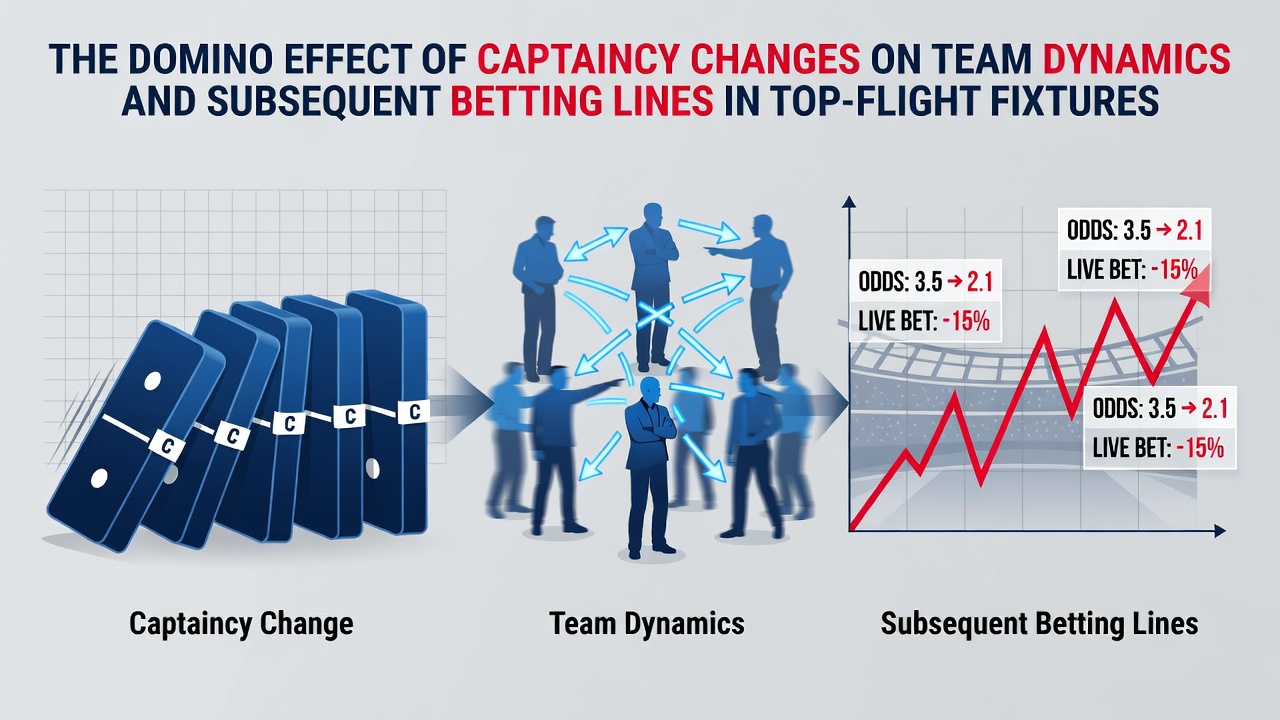
The Domino Effect of Captaincy Changes on Team Dynamics and Subsequent Betting Lines in Top-Flight Fixtures
Captaincy transitions in top-flight football often trigger measurable shifts across team structures, and these adjustments frequently register in betting markets for Premier League, Bundesliga, and La Liga fixtures. Data from performance tracking platforms shows that when clubs appoint new leaders ahead of the 2026-27 campaign, average pass completion rates and defensive organisation metrics can vary by 4 to 7 percent in the opening matchweeks compared with the prior season.
Leadership Shifts and On-Field Communication Patterns
Researchers tracking elite squads have documented how a captain functions as the primary conduit between coaching staff and players during matches. When that role transfers to another individual, teams sometimes require several fixtures to recalibrate verbal cues and positional adjustments. A study published by the University of Queensland examined leadership changes across Australian A-League sides and found corresponding alterations in high-press frequency and set-piece organisation that persisted for up to eight weeks.
Similar patterns appear in European competitions. Observers note that newly installed captains tend to increase their own tackle and interception numbers while teammates show modest declines in those categories until roles stabilise. These micro-adjustments accumulate into broader changes in expected goals and expected points models that betting operators incorporate when setting opening lines.
Performance Data and Market Responses
Betting lines for top-flight matches reflect aggregated statistical inputs rather than isolated variables. When captaincy announcements coincide with pre-season periods such as August 2026, oddsmakers integrate early training-ground footage and internal club reports into their algorithms. Figures released by European sports analytics firms indicate that teams undergoing leadership transitions post an average 0.12 drop in expected points per game during the first five league outings before stabilising.
Bookmakers adjust over/under totals and handicap markets accordingly. In matches involving sides with recent captain changes, live odds frequently display wider spreads during the opening 15 minutes while markets assess whether established hierarchies have re-formed. Industry reports from Canadian gaming regulators highlight that such volatility creates measurable differences in in-play volume compared with fixtures featuring unchanged leadership groups.

Case Examples from Recent Seasons
Take one Premier League club that installed a new captain during the summer window before the 2025-26 campaign. Performance databases recorded an initial increase in long-ball attempts and a corresponding decrease in build-up sequences through central areas. Those tactical tweaks appeared in pre-match odds as a slight elevation in the away win price for the subsequent fixture. After four matches the team reverted toward previous patterns and the lines narrowed again.
Another example comes from Bundesliga records where a leadership change occurred mid-season. The affected side showed elevated foul counts in the first two games under the new captain before the numbers returned to baseline. Markets priced these fixtures with adjusted card lines that later proved accurate once the data settled. Such sequences illustrate how initial uncertainty translates into pricing adjustments that correct as more information becomes available.
Broader Implications for Accumulator Markets
Accumulator builders who monitor captaincy announcements often cross-reference leadership data with travel schedules and fixture congestion. Research from the Australian Institute of Sport demonstrates that teams managing multiple leadership transitions across a single season experience greater variance in clean-sheet probabilities. Operators respond by widening the range of available card and goal markets for those specific fixtures.
European football federations continue to publish aggregated squad reports that include leadership metrics. These documents feed into third-party models used by betting platforms to refine opening prices ahead of August 2026 matchweeks. The result is a feedback loop where performance data informs lines and line movement in turn influences how analysts interpret the impact of any given captaincy decision.
Conclusion
Captaincy changes create traceable effects that move through team communication, statistical outputs, and finally into betting lines across Europe's major leagues. Performance databases and regulatory reports from multiple jurisdictions confirm that markets incorporate these variables within days of announcements. As the 2026-27 season progresses, the same data pathways will continue to shape both on-pitch organisation and the odds offered on top-flight fixtures.