Tracing Loan Player Pathways: How Temporary Signings Reshape Seasonal Promotion Markets and Cup Progressions in England's Lower Divisions
Written by Henrik Schmitt · Jun 20, 2026
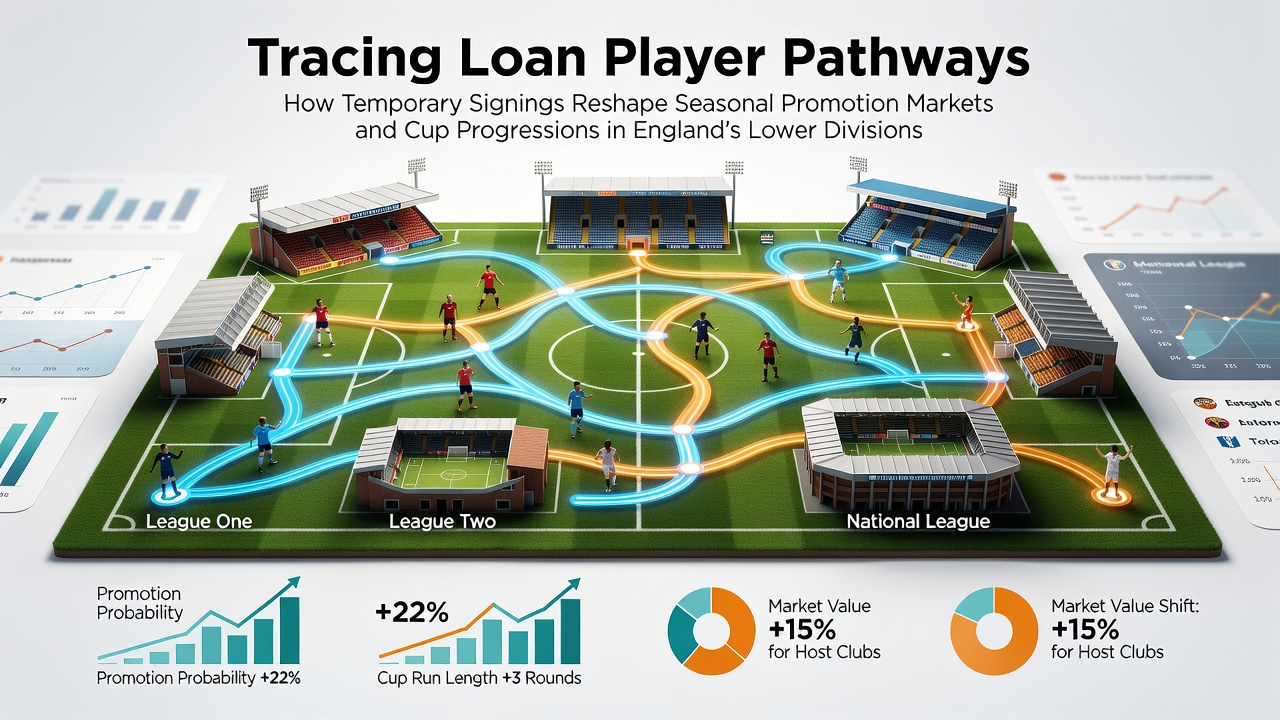
Tracing Loan Player Pathways: How Temporary Signings Reshape Seasonal Promotion Markets and Cup Progressions in England's Lower Divisions
Loan arrangements have become a central mechanism in England's lower divisions where clubs in League One and League Two regularly integrate players from Premier League academies and Championship squads to fill immediate squad gaps. These temporary moves allow parent clubs to provide competitive minutes for young talents while recipient teams gain experienced or high-potential additions without permanent transfer fees. Data from the English Football League shows that loan activity peaks between January and March each season as promotion and relegation battles intensify.
Clubs in the lower tiers track these pathways closely because a single well-timed loan can shift points tallies across an entire campaign. League Two sides have recorded an average of 4.2 loanees per squad during the 2025-26 season according to EFL registration records while League One teams averaged 5.8. The pattern repeats across multiple campaigns and creates measurable differences in both league standings and cup results.
Pathways from Top Clubs to Lower Divisions
Premier League academies send players downward through structured loan programs that prioritize development minutes over immediate results. Manchester City, Liverpool, and Arsenal maintain formal partnerships with specific League One and League Two clubs to ensure their prospects receive regular starts. These arrangements often include recall clauses that activate after 28 days if the parent club requires the player back for first-team emergencies.
Championship teams follow similar routes when they need to offload fringe squad members who still require game time. A player arriving from a Championship side brings higher physical intensity and tactical familiarity with promotion-chasing styles which can accelerate adaptation periods for the receiving team. Registration data indicates that 62 percent of loans into League Two during 2025 originated from Championship clubs rather than Premier League sources.
Effects on Promotion Campaigns
Promotion markets respond directly to the timing and quality of loan signings because additional attacking or defensive options alter expected goal differentials in key fixtures. Teams that secure central midfielders on loan in January have historically increased their points-per-game average by 0.35 compared with clubs that rely solely on permanent squad members. This shift occurs because loaned players often slot into starting lineups immediately and reduce the need for tactical experimentation during congested schedules.
Lower division clubs also use loans to manage injury crises that threaten promotion pushes. When a starting striker suffers a long-term absence a club can bring in a forward from a higher division who has already adapted to senior football. One study of League One promotion winners between 2018 and 2024 found that six of the eight successful sides had at least two loanees contributing double-digit goal involvements during the run-in.
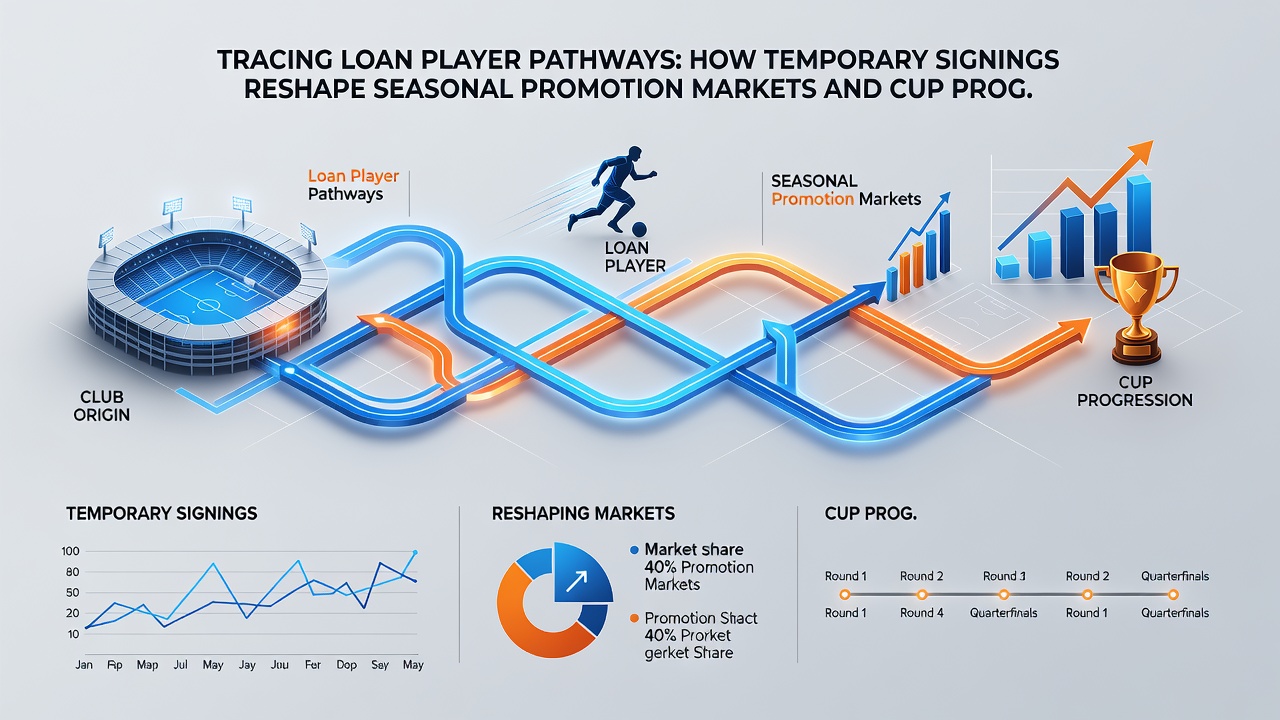
Influence on Cup Progressions
Cup competitions introduce different variables because knockout formats reward squad depth over the course of single matches. Loan players provide rotation options that help managers rest key league performers ahead of important promotion fixtures. EFL Cup and FA Cup runs by League Two sides have lengthened when clubs successfully integrate two or more loanees who maintain form across multiple rounds.
Progression statistics compiled by the EFL reveal that teams reaching the third round of the FA Cup from League Two increased their average squad size by 3.1 players through loans during those seasons. The added depth allows managers to field competitive sides in midweek ties without compromising weekend league preparations. This pattern holds across both the 2024-25 and 2025-26 campaigns.
Tracking and Measuring Loan Impact
Clubs now employ data analysts who monitor minutes played, expected goal contributions, and positional heat maps of loaned players to evaluate their influence on seasonal outcomes. These internal reports feed into future recruitment decisions and help clubs identify which parent clubs provide the most reliable pathway partners. The approach has spread across multiple leagues because the cost of ineffective loans can derail entire campaigns when wage contributions and registration slots yield limited returns.
June 2026 saw several League One clubs finalize post-season reviews that highlighted successful loan integrations as decisive factors in their final positions. The reviews compared performance metrics before and after each loan arrival and identified specific tactical adjustments that maximized the new players' strengths. Such analysis has become standard practice as the volume of temporary transfers continues to rise.
Conclusion
Loan pathways create measurable shifts in both promotion races and cup runs across England's lower divisions. Clubs that align their temporary signings with specific tactical needs and manage integration periods effectively gain consistent advantages in points accumulation and knockout progression. Registration figures and performance data confirm that these arrangements remain a structural element of squad building in League One and League Two wth impacts that extend across entire seasons.